William Ashe
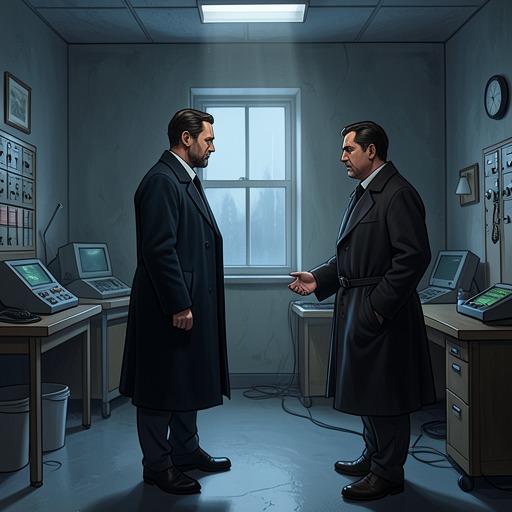
The Spy Who Came in from the ColdWilliam Ashe is a former press correspondent in Berlin whose skill at inventing and sustaining a personal story makes him useful in the effort to approach Alec Leamas. He presents himself as an old acquaintance who owes Leamas money, then turns that claim into practical assistance: cash, meals, a place to stay, and the prospect of contacts. The apparent generosity is part of an intelligence operation, and Leamas recognizes the deception even as he accepts its immediate benefits.
Identity and Introduction
Ashe first approaches Leamas with a story of recognition and an old debt. He says that he once borrowed money from Leamas while working for the BBC in Berlin, and explains that guilt over the unpaid loan prompted him to follow Leamas after seeing him at Marble Arch. The claim gives his attention a personal explanation rather than an openly professional one.
When Leamas identifies himself, Ashe gives the name Ashe, adding that it is spelled with an E. Leamas knows the name is false, but Ashe keeps up the performance by acting uncertain whether Leamas is the man he remembers. The two then examine a National Insurance card together, using it as a prop in the performance of confirming an identity that both men understand differently.
Ashe elaborates the supposed shared past with specific details: a party given by Derek Williams of the Observer, Berlin press acquaintances, and a night out when Leamas allegedly lent him money. He recalls that his own first name is William and that most people call him Bill. The detailed anecdote is not proof of a genuine friendship; it is a story Ashe continues after Leamas has challenged his first approach, and its accumulating particulars make the fiction sound more persuasive.
Approach to Leamas
Ashe’s account of the debt becomes a reason to give Leamas money. At a later lunch, Leamas arrives late and smelling of whisky, unshaven and with a dirty collar. Ashe’s pleasure at seeing him remains undiminished, and he hands him an envelope of money, describing the contents as singles. The scene establishes how Ashe’s intervention supplies material help while Leamas is visibly presenting himself as a man in decline.
Ashe also offers a more substantial form of assistance: access to people. He tells Leamas that contacts matter when a person is on the breadline and says that knowing Sam Kiever helped him escape that condition. Ashe proposes that Leamas stay at his flat for a week or so, while they invite Kiever and perhaps other former Berlin press acquaintances. His offer thus extends beyond the invented debt: it creates a plausible social and professional path for Leamas at a moment when Leamas claims he has no prospects.
The scheme depends on adapting to Leamas rather than persuading him with a polished cover story alone. When Leamas says he cannot write and lists the menial jobs he has done, Ashe answers by emphasizing contacts and arranging hospitality. His reassuring manner supports the identity he is performing as a helpful old acquaintance, while the offer itself gives Leamas a reason to remain within reach of Ashe and the people Ashe proposes to introduce.
Deception and Recognition
Leamas does not simply accept Ashe’s story. During a meeting with Ashe and Kiever, he states that Ashe followed him from prison, gave him money he did not owe, bought him expensive meals, and put him up in his flat. He also points out that the membership card for the place bears the name Murphy and asks whether that is Ashe’s real name. The confrontation gathers the practical signs of the approach into a direct accusation: the unexplained attention and generosity are evidence of a constructed identity.
This recognition changes the character of Ashe’s assistance without ending it. Leamas has already understood that the earlier Berlin history is fabricated, and his question about Murphy makes the false name part of the explicit exchange. Yet the arrangement has served its immediate purpose: Ashe has established contact, given Leamas money, and offered him a place and introductions. The deception works not because Leamas is wholly convinced, but because its material benefits and apparent social logic remain usable.
Narrative Role and Significance
Ashe’s role is concentrated in the construction of Leamas’s apparent return to civilian life. The fabricated debt gives the approach a human motive; the envelope, meals, flat, and promised introductions make the approach concrete. Each gesture can be read at once as ordinary assistance and as a step that places Leamas in a new set of relationships. The novel thereby shows how espionage can operate through familiar social forms rather than through conspicuous commands.
Ashe’s invented recollections also echo the larger problem of identity in the story. He presents a past with enough names, places, and anecdotes to make a false acquaintance seem continuous, while Leamas recognizes the invention and tests its limits. Ashe is therefore more than a messenger bearing money: he is the agent of a carefully staged personal narrative, one that helps turn Leamas’s apparent need into an instrument of the operation.